
No products in the cart.
Toilet bowl guides
How to choose a toilet bowl in Singapore: S-trap, P-trap and set-out explained
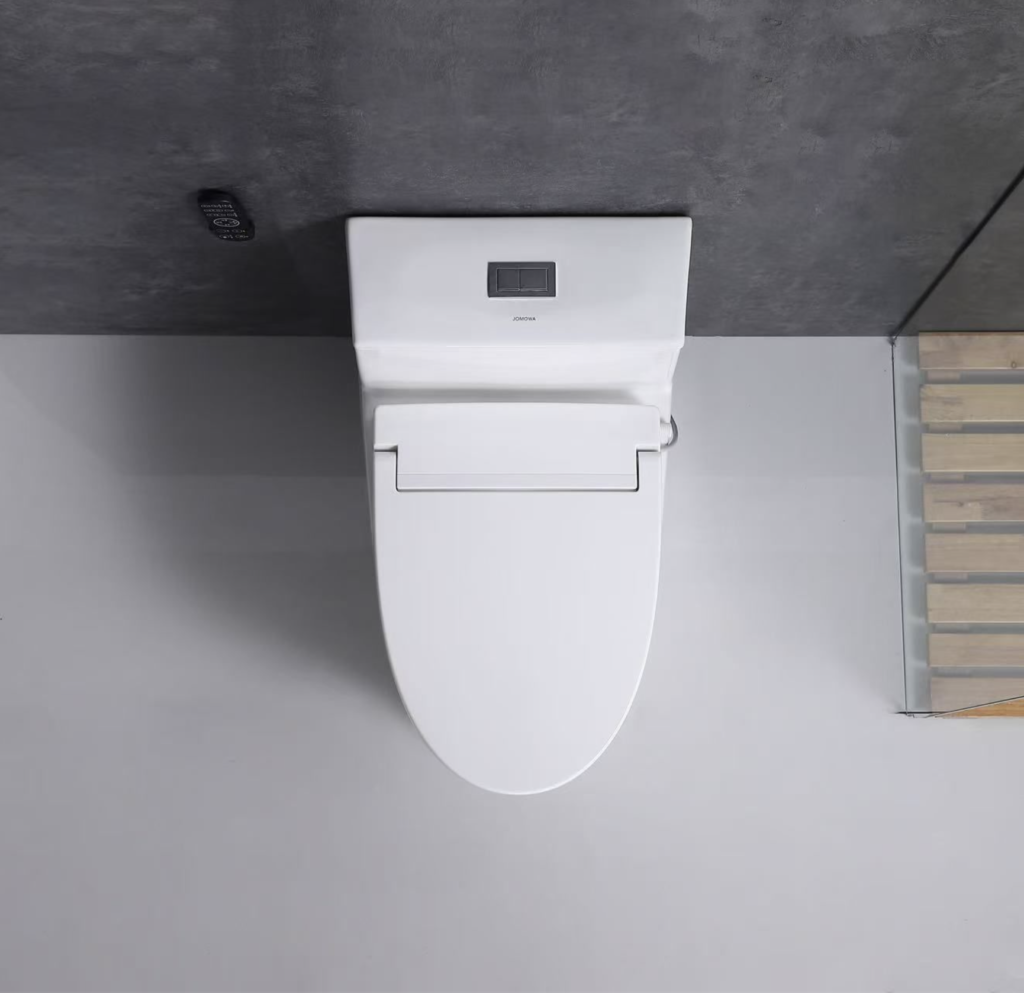
Before choosing a toilet bowl in Singapore, confirm four things: the outlet type, the set-out measurement, the available bathroom space and the water-efficiency information. An S-trap discharges through the floor, while a P-trap discharges horizontally towards a wall or service duct. The toilet must match the plumbing that is already there.
In short
- Check whether your existing toilet uses an S-trap or P-trap.
- Ask a plumber to confirm the set-out before you order.
- Measure the full footprint, not only the width of the bowl.
- Look for the applicable PUB WELS information on the flushing system.
- If you want a smart bidet seat, check the bowl shape and plan the water and electrical connections.
On this page
- S-trap or P-trap
- How to measure the set-out
- One-piece, two-piece or wall-hung
- WELS and water efficiency
- Smart bidet-seat compatibility
- Checks before ordering
S-trap or P-trap: where does the waste outlet go?
The trap is the curved waterway built into the toilet. It holds a water seal that helps stop drain gases entering the bathroom, then carries waste into the sanitary pipe.
An S-trap toilet has a vertical outlet that passes down through the floor. A P-trap toilet has a horizontal outlet that runs towards a wall or service duct. Singapore’s Building and Construction Authority describes the same distinction in its guidance for prefabricated bathrooms: S-trap means a vertical outlet and P-trap means a horizontal outlet.
Do not assume the trap from the age or type of your flat. Look behind and below the existing bowl, then have the installer confirm the arrangement. If the outlet direction does not match, the toilet may not connect correctly even when its external dimensions fit the room.
A SUMO SC.01-V smart bidet seat shown on an elongated toilet bowl. The coming SUMO toilet-bowl model is not pictured.
What is the toilet set-out?
The set-out describes the position of the waste outlet relative to the finished wall or floor. For a floor-outlet toilet, the important measurement is commonly taken from the finished wall to the centre of the floor outlet. For a wall outlet, the installer checks the outlet centre and height against the toilet specification.
Measure from the finished surface, including tiles. Skirting, boxed pipes and an uneven wall can change the usable distance. The safest sequence is:
- Remove or inspect the existing bowl only when the installer says it is safe.
- Identify whether the outlet is through the floor or towards the wall.
- Measure to the centre of the outlet from the finished wall or floor reference.
- Compare that number with the manufacturer’s installation drawing.
- Confirm the connector and final position with the plumber before purchase.
PUB’s sanitary-work guidance states that a purpose-made connector should connect a water closet to the discharge pipe and advises replacing the connector when changing a toilet to preserve airtightness. Regulated sanitary plumbing work should be handled by a PUB Licensed Plumber.
One-piece, two-piece or wall-hung toilet?
One-piece
The cistern and bowl form one continuous unit. There are fewer external joints to wipe around, and the profile often looks compact. Check the total depth carefully because the integrated body may sit differently from the toilet being replaced.
Two-piece or close-coupled
The cistern and bowl are separate components joined during installation. This is a familiar layout and can make individual parts easier to handle. The joint between cistern and bowl adds another area to clean.
Wall-hung
The bowl is fixed to a frame, with the cistern concealed behind a wall or service panel. The clear floor is easy to clean, but the frame, wall construction and maintenance access need to be planned before tiling. This is not normally a like-for-like replacement for a floor-mounted toilet.
How to check WELS information
Singapore’s Mandatory Water Efficiency Labelling Scheme uses tick ratings to show water efficiency. PUB lists dual-flush low-capacity flushing cisterns and WC flush valves among the products covered by mandatory WELS requirements. Check the label and registration information that applies to the complete flushing arrangement being supplied.
A higher tick rating indicates better water efficiency within the applicable product category. It does not replace the trap, set-out or installation checks. Those still have to match the bathroom.
Will a smart bidet seat fit?
If you plan to add a smart bidet seat, check the bowl from above as well as below. A round bowl has a shorter curved front. An elongated bowl extends further forward. The mounting-hole position, usable flat area and clearance around the cistern also matter.
SUMO makes the U-shaped SC.01-U for round bowls and the V-shaped SC.01-V for elongated bowls. Both measure 510 x 380 x 49 mm and are rated 220 V. Read the U-shaped and V-shaped smart bidet-seat guide before choosing a seat.
Checks before ordering a toilet bowl
- Trap type: floor outlet or horizontal outlet.
- Set-out: measured from the correct finished surface.
- Overall size: width, depth and cistern height.
- Clearance: door swing, shower screen, vanity and nearby pipes.
- Flushing system: applicable WELS label and registration information.
- Installation: connector, water supply and access for maintenance.
- Bidet plans: bowl shape, mounting area, water connection and suitable power point.
About the coming SUMO toilet bowl
SUMO is preparing a new toilet bowl for Singapore. Its trap type, set-out, dimensions, flushing specifications, WELS information, price and smart-bidet compatibility will be published only after they are confirmed. Follow the SUMO toilet-bowl collection page for the launch details.
Questions
Is an S-trap or P-trap more common in Singapore?
Both arrangements are used. An S-trap discharges vertically through the floor, while a P-trap discharges horizontally. Check the actual outlet in your bathroom rather than choosing from a general rule about property type or age.
Can I measure the toilet set-out myself?
You can take an initial measurement, but have the plumber or installer verify it against the manufacturer’s installation drawing before ordering. Finished wall surfaces, connectors and boxed pipes can affect the usable set-out.
Does every toilet bowl need a WELS label?
PUB’s mandatory scheme covers specified flushing products, including dual-flush low-capacity cisterns and WC flush valves. Check the applicable WELS information for the complete toilet and flushing arrangement being offered.
Can I replace a toilet bowl without changing the connector?
PUB advises that the connector should be replaced when changing a water closet to help ensure airtightness. Ask a PUB Licensed Plumber to assess the existing connection.
Will the new SUMO toilet bowl fit a SUMO smart bidet seat?
Compatibility will be confirmed when the toilet-bowl specifications are final. The collection page will list the compatible seat model before launch.
Sources: BCA guidance on S-trap and P-trap systems; PUB WELS information; PUB plumbing-work requirements.
Help choosing
Not sure which one is right for you?
Send a photo of your toilet bowl, and we'll help you choose between the U-shaped and V-shaped seat.
You can also call the same number, or leave a message here.